Let’s be honest. If you rely on the shrill, artificial screech of a smartphone alarm to drag you out of bed, you’re missing out on life’s greatest free show. Here in India, we don’t just wake up to a clock; we wake up to a complex, beautiful, and sometimes chaotic symphonic orchestra. I’m talking about the dawn chorus—that magical (and let’s face it, sometimes maddening) hour when the avian world decides that sleep is for the weak.
I remember my time living near the Sanjay Gandhi National Park in Mumbai. At 7 AM, the cacophony of the city hadn’t yet taken over. Instead, my ears were treated to a mix of sparrows, mynas, and even the distant strains of Rabindra Sangeet floating from a neighbor’s radio, blending with the birds . It was a distinctly Indian way to greet the day. It’s not just noise; it’s a feeling.
By the way, you don’t need to live in a forest to experience this. Whether you’re in a dusty village in Punjab, a crowded colony in Chennai, or a bustling metropolis like Bangalore, 7 AM has a distinct sound. So, let’s play a game of “Name that Tune,” but instead of pop songs, we’re identifying the feathered friends who are basically the unofficial alarm clocks of India. Set your circadian rhythm to this playlist.

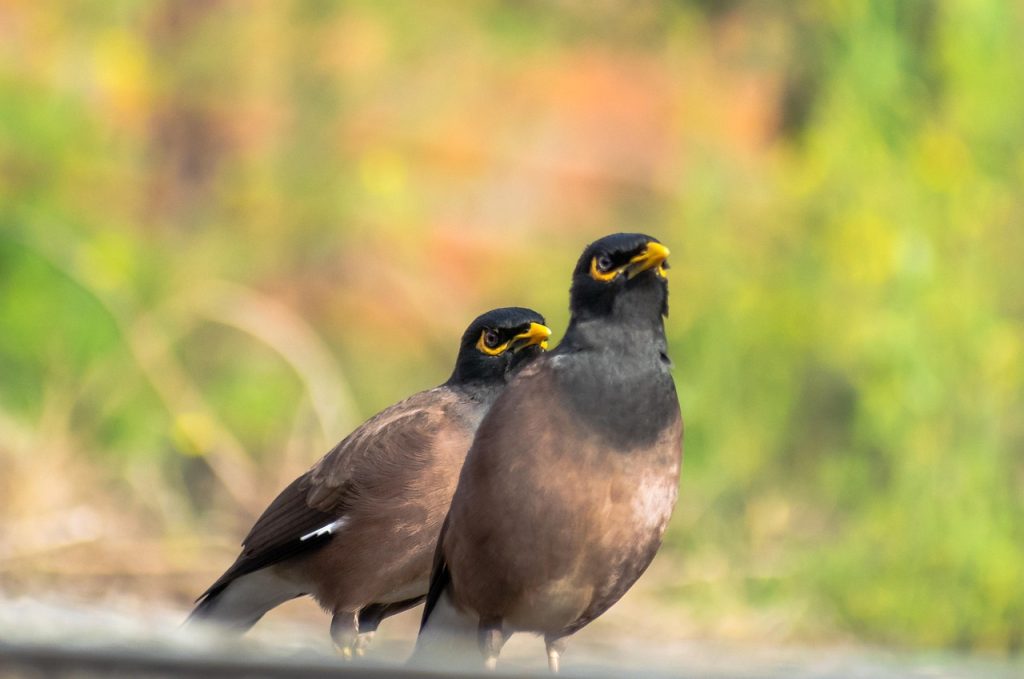
1. The Bully With a Golden Voice: The Common Myna
If India’s mornings had a traffic warden, it would be the Common Myna. Love them or hate them, you cannot ignore them. They are the first ones at the breakfast table and the loudest ones at the party.
Honestly, their call isn’t really a “song.” It’s more of a conversation. They have this incredible repertoire of gurgles, growls, and sounds that mimic someone clearing their throat . Have you ever noticed how they seem to be yelling at the world? That’s because they are highly territorial. I once had a pair that used to perch on my window ledge in Delhi, cocking their eyes at me as if I was the intruder in their apartment.
They are the quintessential “first birds” you hear, often around 5:30 or 6:00 AM, but by 7 AM they are in full swing, competing with the crows . They remind me of that one over-caffeinated colleague who shows up to the meeting way too enthusiastic. Annoying? Sometimes. But you have to admire the hustle.

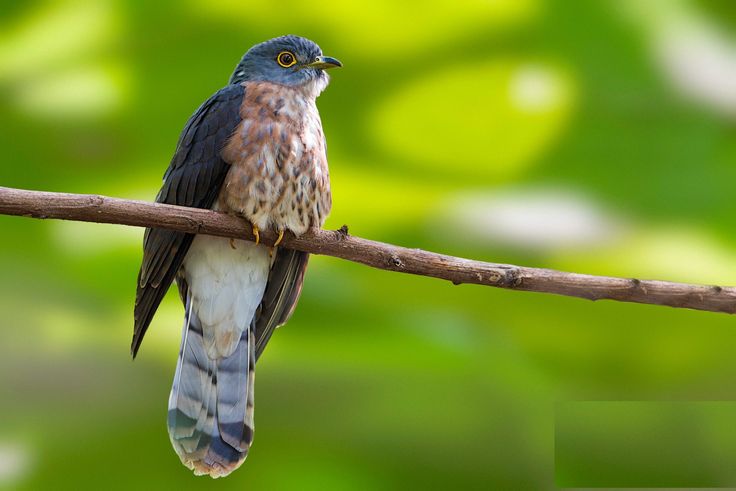
2. The “Brain Fever” Headache: The Common Hawk-Cuckoo
Okay, let’s address the elephant—or rather, the bird—in the room. If you’ve spent a summer in India, you know this guy. The Common Hawk-Cuckoo, affectionately (and accurately) nicknamed the “Brain Fever Bird.”
Imagine this: It’s 7 AM. You’re trying to enjoy that first sip of chai. And then it starts. A repetitive, piercing, three-note whistle that just goes on and on and on. “Pee-pee-pea…” It sounds like someone is slowly drilling into your skull, which is exactly why the British colonials in India named it the “brain-fever bird” . Its call is described as having a “damnable iteration” .
But here’s the thing—as annoying as it can be, it’s also the sound of the Indian summer. It’s relentless, just like the heat. By 7 AM, this bird has already started its mission to test your patience. And yet, it’s a brilliant piece of natural engineering. The bird is a master of disguise, looking like a hawk (a Shikra) to scare other birds, all while plotting to lay its eggs in their nests . It’s the original con artist, and its call is the soundtrack of a lazy, hot morning.
3. The Six-O’Clock Sharp Suprise: The Indian Pitta

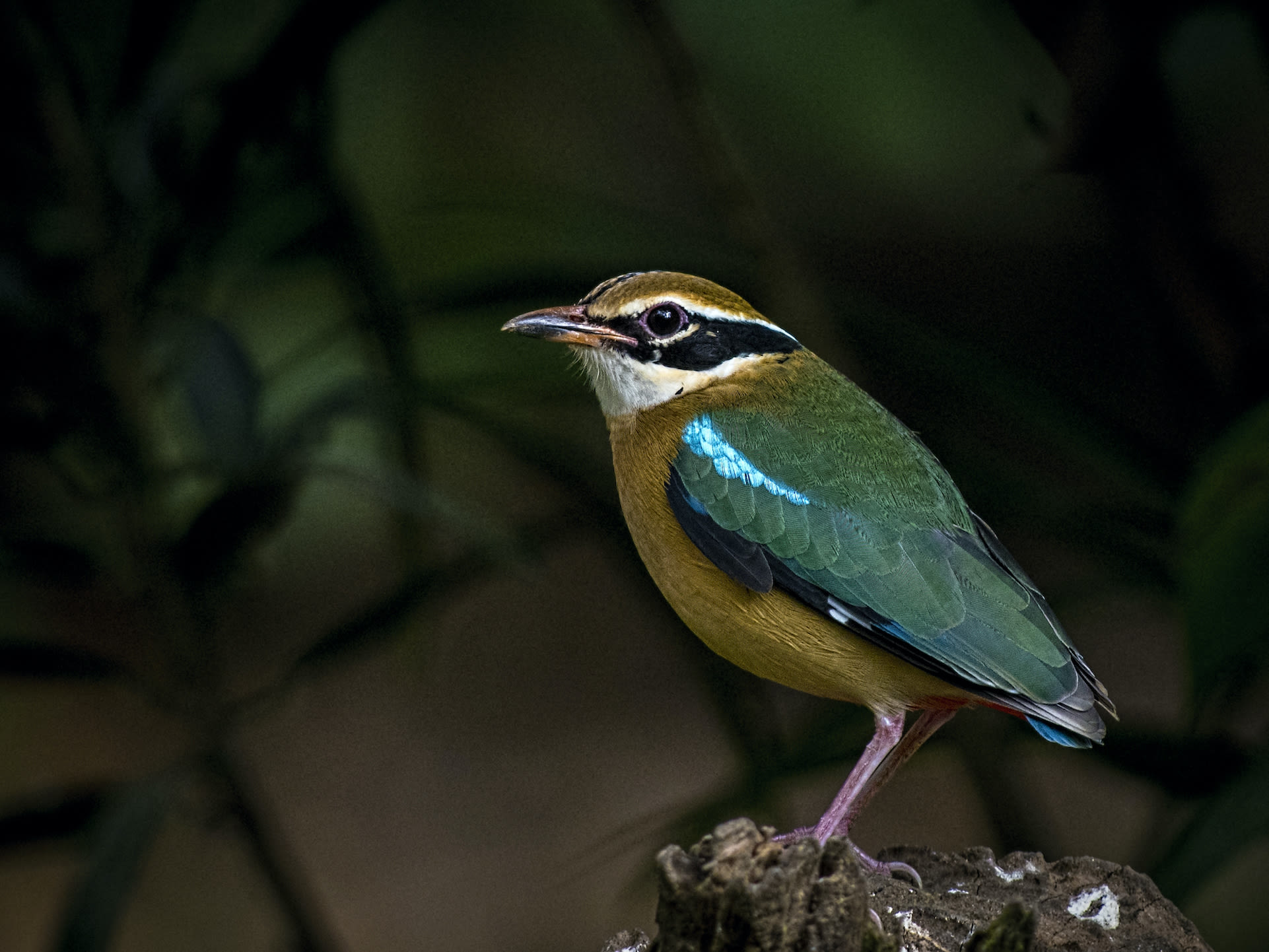
If the Brain Fever Bird is the annoying alarm, the Indian Pitta is the snooze button you actually like. This bird is a burst of color—nine colors, to be precise, which is why it’s called Naurang in Hindi . But its looks aren’t the main event; it’s the voice.
At dawn and dusk, the Indian Pitta lets out a loud, clear, two-note whistle: Wheet-tieu or Wieet-pyou . It’s so punctual that in Tamil, it’s famously known as Arumani Kuruvi, which translates to the “Six-o’clock bird” .
By 7 AM, they’ve usually finished their main performance, but if you’re walking in a scrub forest or even a leafy garden in central India, you might catch the last echoes of their call. It’s a wild, fluty sound that feels like the forest is politely reminding you that you’re running late for your date with nature.

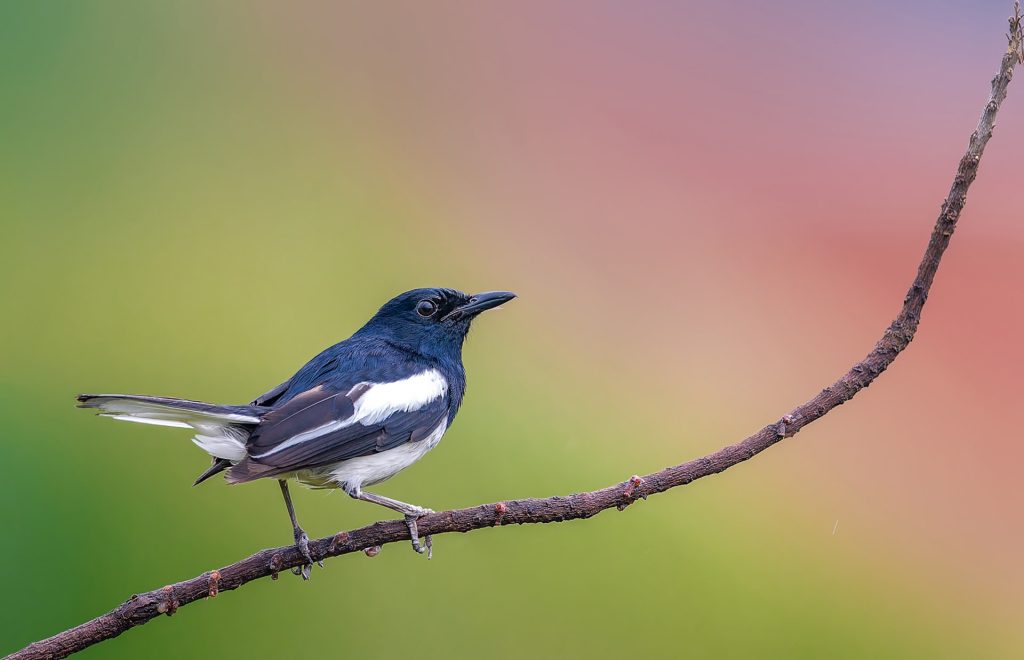
4. The Melodious Flirt: The Oriental Magpie-Robin
Now, let’s pivot to something truly beautiful. If the Myna is the loudmouth politician of the garden, the Oriental Magpie-Robin is the shy, gifted singer at the open mic night.
This bird is sharply dressed in black and white, and it’s a bit of a snob. It’s shy, often hiding in the bushes, and it will fly away the moment it spots you with your camera . But its voice? Pure magic. At 7 AM, male Magpie-Robins are in full flow, belting out a long, melodious, and varied song to attract mates .
What’s fascinating is watching them sing. They puff up their chest, point their beak to the sky, and jerk their tails up and down like a metronome . It’s a performance. It’s the kind of sound that makes you stop scrolling through Instagram and just listen. It feels intimate, as if the bird is singing just for you.
5. The “Saath Bhai” Social Network: The Jungle Babbler
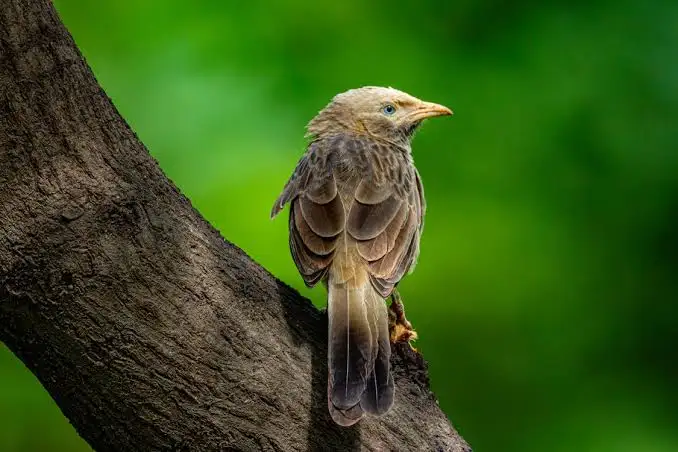
Ever seen a group of seven brown birds hopping around on the ground, looking like they’re gossiping about the neighborhood cat? Those are Jungle Babblers, and they are the ultimate extroverts.
You rarely see a Babbler alone. They move in gangs—usually groups of 5 to 10 birds—and they are loud . Their scientific name might be Turdoides striata, but their local name, “Saath Bhai” (Seven Brothers) , is way more fitting .
By 7 AM, the “Saath Bhai” gang is already deep in discussion. They have a loud, chattering, two-note whistle that they use to keep the group together as they rummage through the leaf litter . It sounds like a family arguing about where to go for breakfast. They are noisy, messy, and incredibly social. In a way, they teach us a thing or two about sticking with your crew. The next time you hear that chaotic chatter, just smile and think of them as the morning’s neighborhood aunties, catching up on the latest gossip.

6. The Whistling Schoolboy of the Western Ghats: The Malabar Whistling Thrush
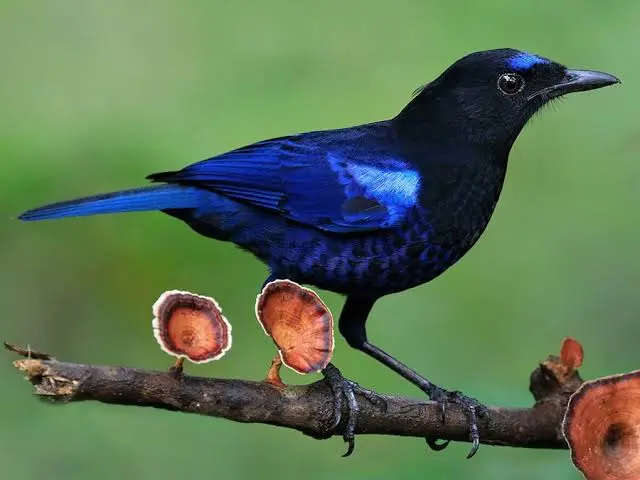
If you are lucky enough to be in the Western Ghats, the 7 AM soundscape changes entirely. It’s here that you’ll meet the Malabar Whistling Thrush, a bird so blue it looks like a piece of the night sky fell onto the forest floor.
This bird has the best nickname in the business: The Whistling Schoolboy . And once you hear it, you’ll know why. Its call is a clear, high-pitched, human-like whistle. It’s not a complex song; it’s a simple, beautiful whistle that sounds like a kid walking home from school, totally carefree .
I’ve stood near streams in Coorg at dawn listening to this bird. It’s hauntingly beautiful. It whistles, pauses, and whistles again, often holding a single note. It’s as if the forest is trying to have a conversation with you. It’s the sound of pristine wilderness, of misty hills, and of a world that hasn’t been touched by the noise of traffic.

7. The Rhythm of the Forest: The Tailorbird and The Woodpecker
Finally, let’s talk about the percussion section. By 7 AM, the forest (or your garden) has a rhythm section going.
First, there’s the Tailorbird. You might not see it, but you’ll hear its insistent, loud “towit-towit-towit” call. It’s sharp and repetitive, providing a steady backbeat to the melody of the Robins and Babblers . It’s the bird equivalent of someone tapping a pen on the desk—consistent and hard to ignore.
Then, there’s the drummer: the Woodpecker. The sound of a woodpecker drilling into a tree at 7 AM isn’t just a sound; it’s a statement. It echoes through the quiet morning air, a staccato burst that breaks the silence. As described by sound recordists in the Satkosia forests, the woodpeckers provide the “contrapuntal rhythms” to the dawn chorus, mixing with the calls of langurs and squirrels to create a truly wild symphony .
The Science of the Chorus (And Why You Should Care)
Now, you might be wondering, “Why do they do this every single morning at the crack of dawn?” Are they just happy to see the sun? Well, not exactly. There’s a method to the madness.
According to experts from the Bird Watchers Society, the “dawn chorus” is a vital tool for conservation. By recording and studying these sounds, scientists can gauge the health of an ecosystem. Even if you can’t see the birds, you can hear them. A rich, diverse chorus means a healthy habitat . Sadly, in many urban areas, these soundscapes are under threat. The sounds we hear today might be lost tomorrow .
So, listening to the birds isn’t just a peaceful hobby; it’s a way of taking the planet’s pulse.
How to Build Your Own “7 AM Soundscape
You don’t need a field guide to enjoy this. Here’s a little homework for tomorrow morning:
- 1Step onto your balcony or veranda at exactly 7 AM. Put your phone down.
- Close your eyes. Try to filter out the sound of the traffic, the pressure cooker, and the neighbor’s TV .
- Identify the layers.
- Can you hear the Myna’s throaty gurgle?
- Is there a distant Koel trying to outsing everyone?
- Do you hear the sharp “towit” of the Tailorbird in the bush next door?
- Or the metallic “tonk” of the Coppersmith Barbet?
Frequently Asked Questions About Indian Bird Sounds
Q: Why do birds sing so loudly at 7 AM specifically?
A: It’s a combination of atmospheric conditions (sound travels farther in the cooler, denser morning air) and biology. Males sing to establish territories and attract mates after a night of fasting. It’s essentially the avian version of a morning workout and a dating app profile update all in one.
Q: What is the “brain fever” bird I hear every summer?
A: That’s the Common Hawk-Cuckoo. Its repetitive, three-note call (“pee-pee-pea”) is synonymous with Indian summers and can drive you a little crazy—hence the name .
Q: Are bird sounds in South India different from North India?
A: While many species (like Mynas and Crows) are pan-India, the soundscapes differ. In the South, especially in the Western Ghats, you are more likely to hear the Malabar Whistling Thrush or the Indian Pitta. In the North, the calls might be mixed with more Barbets and Parakeets . The accent changes with the geography
The Final Call
The 7 AM bird sounds of India are more than just wake-up calls. They are a link to our past, a marker of our present environmental health, and a reminder that nature is incredibly resilient, thriving even in the corners of our bustling cities. They add a layer of life to the morning air that no machine can replicate.
So, tomorrow morning, when that first bird starts its song, don’t groan and pull the blanket over your head. Listen. Really listen. It’s the sound of India waking up, and it’s inviting you to join the chorus.